.jpg)
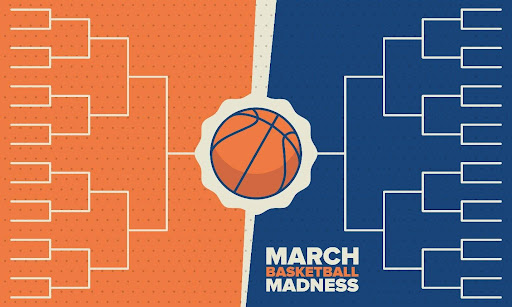
March after March, the same hushed ritual plays out in offices, college basketball chat rooms, and living-room couches everywhere. A blank bracket gets printed or the URL of the bracket is exchanged. Another is “I’m really bad at this but I’ll play.” And soon a small number of people become absolutely convinced that this year is their year.
March Madness has a way of drawing us in — not because we go into it as the perfect version of ourselves, but because the tournament makes basketball into a collective story. Upsets feel personal. Wins feel earned. And the one time you took a leap of faith with a pick? It’s your identity for a couple of weeks.
But beyond the mayhem and fun, there is a more intelligent way to fill out your bracket. Not an infallible path — none is — but a path that weighs logic, history and human conduct.
This guide is not about winning every time. It’s about realizing how brackets actually work, figuring out why people flub them so often, and finding ways to dip the odds in your favor by just a little bit.
Why Bracket Strategy Is No Joke
Why do most people join a March Madness pool? But after picks are locked, something shifts. You begin to watch games you would normally ignore. You root for teams you’ve never watched compete. Suddenly, a late-night West Coast tip-off is meaningful.
Which is why strategy matters — that emotional investment.
A bracket is not only a prediction — it's also a reflection of how you think about risk, probability and competition. Some people play it safe. Others chase chaos. The players who figure that out are the smartest.
How March Madness Brackets Really Work
On a fundamental level, the N.C.A.A. tournament is a one-and-done slugfest. You lose once, and you’re done for the season. That structure alone accounts for why brackets are so unpredictable.”
In most pools, you get a point for every team that you pick to win a game and actually wins, with the value of each correct selection sometimes rising from round to round. This means:
- Early-round games are about survival
- Late-round games are about separation
Selecting the championship team properly is exponentially more important than getting a few early upsets right — but too many missed early matchups and you might be doomed before the week is over.
Realizing that tension is key to strong bracket strategy.
What Seeds Actually Mean (and What They Don’t)
Seeds are supposed to order teams from strongest to weakest — but they’re not destiny.
Historically:
- It had been decades since a 1-seed got upset by a 16-seed … until it wasn’t
- 12s beat 5s often enough to be at least predictable
- 7–10-matchups are often tighter than they might appear
The error many people make is that they treat seeds as though they are guarantees. They’re not. They’re where we begin, growing out of conference strength, scheduling and committee preference.
Smart brackets honor seeds — and avoid worshiping them.
Favorites vs. Upsets: The Tension of Balance
Every year, those are the brackets a friend fills out by picking without rhyme or reason. And almost every year, someone else selects nearly all of the favorites.
Neither approach works consistently.
Upsets are most likely:
- In the first two rounds
- When teams have contrasting styles
- When a lower-seeded team has veteran leadership or guards who can play at NBA distances
But, at a later round:
- Consistent teams
- Deep rotations
- Experienced coaches
A good bracket often appears conservative early, bold selectively and disciplined late.
Beyond the Score: What to Watch for in the New Orleans Bowl
If you’ve ever watched college basketball up close, you understand that stats don’t always tell the whole story.
When evaluating teams, consider:
- Consistency: Are they prone to vanishing?
- Defense: Tournament games slow down; defense travels
- Depth: Foul trouble presents thin rotations With some foul trouble, thinning rotations.
- Coaching: Some coaches just know how to survive March.
They matter more, in fact, than highlight reels.
Brackets Are Human, and So Are Biases
One of the great things about March Madness is how emotional it is.
People pick:
- Their alma mater
- Teams they saw win recently
- Programs with strong media narratives
There is nothing wrong with that; it’s part of the fun. But being aware of your biases also allows you to determine when to lean into them and when to take a breath.
Similarly, that same emotional connection is why even sports culture — everything from rivalries and colors to uniforms — means so much. Whether it’s fans in throwback jerseys, or teams wearing outfits that evoke a shared look among players and supporters, identity factors into how we experience the game. It’s something anyone who has followed basketball culture closely — or hung around custom team gear, such as at USportsGear, knows instinctively: Visuals, symbols and a shared identity power how we connect to competition.
Pool Size Changes Everything
Strategy isn’t one-size-fits-all.
It works in a small office pool, where favoritism can pay off just by being consistent, sort of like consistent trumps chaos.
In a deep pool, the safe play is to be one more face in the crowd. To win you just need one or two smart differentiators — more often than not, it’s the Final Four or championship pick.
The main thing to ask isn’t “Who’s the best team?”
It’s “Who is going to win and separate my bracket from the rest?”
Accepting the Role of Luck
And the reality no strategy guide can escape: Luck is relevant.
A last-second shot. A twisted ankle. Foal call that swings momentum. Single-elimination magnifies randomness more than any other sports format does.
And that’s okay.
March Madness isn’t about mastery, it’s about taking part. It's about hallway conversations, the sharing of frustration, surprise joy and weird pride in knowing that everyone else was wrong and we were right.”
Smarter Picks, Better Experience
By the time the tournament is finished, practically no one has a perfect bracket. But the people most enjoying it weren’t pursuing perfection — they were participating.
They understood the game. They respected the chaos. And they made guarded picks.
And that, right there, is the central insight of bracket strategy. Not winning every year — but cultivating a richer, smarter, more human experience.
.jpg)