It starts every September. Someone in accounting sends the email. "Who wants in on the pool this year?" Within 24 hours, half the office has signed up. By Week 3, people who barely follow football are checking scores on their phones during meetings.
Office pools are one of the few things that have survived every workplace transformation of the last three decades. Open floor plans came and went. Remote work reshuffled everything. Slack replaced the water cooler. But the NFL pick'em sheet? Still standing. Still bringing people together who would otherwise never talk to each other.
According to the American Gaming Association, an estimated 50 million Americans participate in some form of office pool or bracket competition each year. That number has held steady even as the workplace itself has gone through massive changes. The format adapts. The appeal does not.
What makes this interesting is not just the sports. It is the decision-making underneath it.
The Decision Layer Nobody Thinks About
Every office pool is a decision game at its core. You look at the available information. You weigh the options. You commit to a pick. Then you live with the consequences.
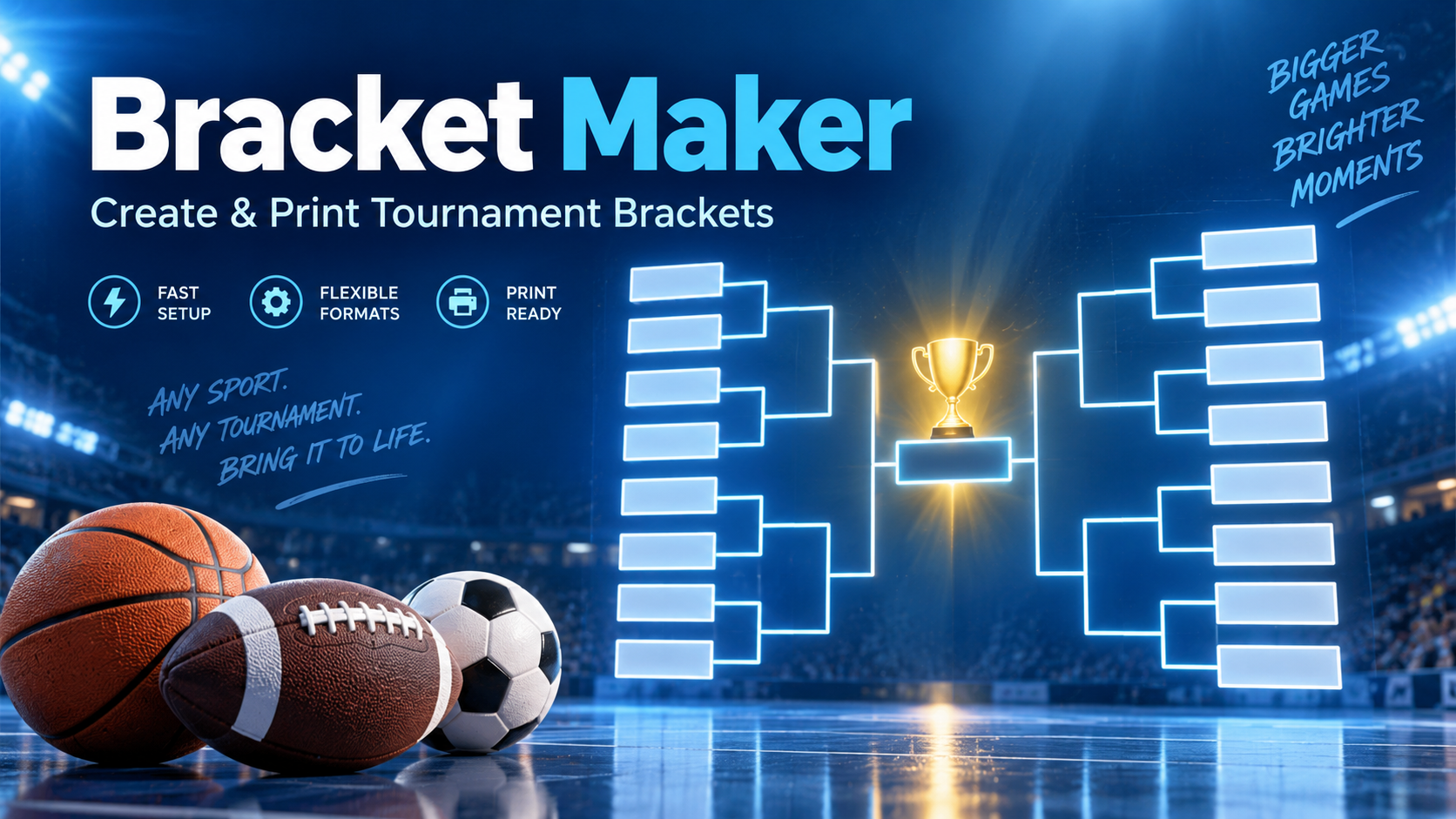
Survivor pools force you to think long-term. You cannot just pick the best team every week because you might need them later. Confidence pools make you rank your certainty, which is a completely different skill than just picking winners. Pick'em pools test breadth of knowledge. Bracket competitions test your ability to project outcomes multiple rounds deep.
These are not trivial mental exercises. Research from the Journal of Behavioral Decision Making has shown that prediction tasks like bracket challenges activate the same cognitive processes used in financial forecasting and risk assessment. The stakes are lower, obviously. But the mental mechanics are the same.
That is part of why office pools hook people who do not care about sports. The game underneath the game is about pattern recognition, probability, and the willingness to commit to a decision when the outcome is uncertain.
The Tiebreaker Problem
Anyone who has run an office pool long enough has dealt with it. Two people end up with the same record. The tiebreaker formula does not settle it. Now what?
Most platforms use point differentials or strength of schedule metrics to break ties. OfficePoolStop, for example, uses a strength of victory system that looks at the quality of wins rather than just the number of correct picks. That works for most situations.
But sometimes the math does not cooperate. And when it does not, people fall back on the oldest tiebreaker in human history. A simple head to head game of chance.
Rock Paper Scissors has been used to settle everything from auction house deals worth millions of dollars to federal court disputes. Christie's once won the right to sell a Picasso collection by beating Sotheby's in a single game of Rock Paper Scissors. A judge in Florida ordered lawyers to use it to resolve a procedural argument. In offices across the country, it settles who buys lunch, who takes the last parking spot, and yes, who wins the pool when the numbers are dead even.
The game is far more strategic than people assume. A study from Zhejiang University found that players follow predictable patterns even when they think they are being random. Winners tend to repeat their last move. Losers shift to the next option in the sequence. The World Rock Paper Scissors Association reports that 36 percent of all first throws are rock, which means opening with paper gives you a measurable statistical advantage.
For fans who want to test that themselves, platforms offering Rock Paper Scissors online have turned what used to be a playground game into a competitive digital format with real-time matches. It is the same basic decision loop that makes office pools addictive. Read the situation. Make a call. See if you were right.
Why Simple Formats Keep Winning
There is a reason the most popular office pool formats have barely changed in 30 years. Pick'em. Survivor. Confidence. Brackets. The rules fit on an index card. Anyone can join without a tutorial.
The same principle applies to every game that gets mass adoption in a workplace setting. Low barrier to entry. Clear rules. Enough depth to reward people who take it seriously without punishing people who are just having fun.
Fantasy football tried to be the next evolution of the office pool, and for some groups, it worked. But the time commitment scared off casual participants. You need to set lineups every week, manage a waiver wire, track injuries across 32 teams, and make trade decisions. That is a hobby, not a lunch break activity.
Office pools survived because they require one decision per week. Pick the winners. Rank your confidence. Choose your survivor team. Done. That simplicity is not a weakness. It is the entire reason the format scales to millions of participants every year.
Medal's 2025 State of Gaming Report highlighted this same dynamic in the digital gaming space. They call it "friendslop," games built around shareable, low commitment moments rather than skill intensive deep play. The most viral game formats of the last two years have been the simplest ones. Not because people are lazy. Because people are busy.
The Social Glue
The real value of office pools has never been the competition itself. It is what the competition creates around it.
A 2024 study from the Society for Human Resource Management found that workplace social engagement dropped 18 percent in companies that went fully remote between 2020 and 2023. The organizations that maintained higher engagement scores disproportionately had some form of structured social activity, and office pools were among the most commonly cited examples.
It makes sense. A pick'em pool gives coworkers a reason to talk that has nothing to do with deadlines, deliverables, or performance reviews. It gives the quiet person in engineering a reason to interact with the outgoing person in sales. It creates a shared language that cuts across departments.
That is not trivial. In an era where companies spend millions on team building consultants and culture initiatives, a free NFL pick'em pool often does more for morale than any offsite retreat ever could.
The Format Keeps Evolving
The core of office pools stays the same, but the platforms keep getting better. Modern pool hosting tools offer automated scoring, real time standings, mobile responsive pick sheets, and custom branding. What used to require someone in the office manually tallying results on a spreadsheet now runs itself.
The 2026 FIFA World Cup is expected to drive a massive spike in bracket and pick'em participation this summer, especially with games being hosted across the United States, Canada, and Mexico. For the first time, 48 teams will compete in the tournament, creating bracket possibilities that dwarf anything March Madness offers.
That expansion means more games, more upsets, and more opportunities for casual fans to get involved. The barrier to entry for a World Cup pool is even lower than an NFL pool because soccer results are harder to predict, which levels the playing field between diehards and newcomers.
The platforms that will handle the biggest pools this summer are the ones that figured out years ago what makes a good prediction game. Keep the rules simple. Make it easy to participate. Let the competition do the rest.
Office pools are not going anywhere. Neither are the simple decision games that fuel them. The format changes. The technology improves. But the core appeal, making a call and seeing if you were right, is as old as competition itself.
And it still works.