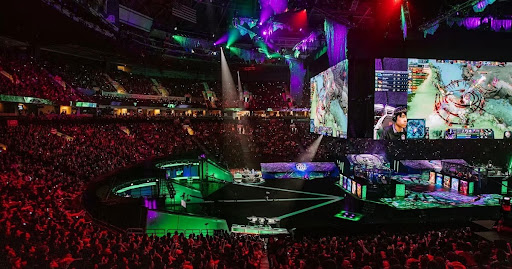
The professional Dota 2 scene is unlike any other discipline. A team can win a major tournament in April, have a poor run in May, sit out June and still qualify for The International. In Dota 2 in 2026, this scenario wasn’t seen all that often, but there were still a few teams whose form was inconsistent yet who managed to compete in the major tournaments.
However, it is consistency that distinguishes a mid-table team from a top-tier one. As the season is packed and a Tier 1 event takes place every month, teams need to constantly keep themselves in shape. For players, this means not just more matches, but constantly adjusting their approaches to drafts, training and recovery, as the calendar demands consistency throughout the year.
The Competitive Calendar Leaves Little Room for a Long Break
The Dota 2 esports calendar is structured in such a way that teams must maintain a high level of performance for virtually the entire season. This is particularly evident in 2026, as Tier-1 and Tier-2 events and qualifiers take place every month. Previously, teams could structure their season around a few key events, with long periods of preparation in between. Now, even a small squad must plan when to play at their best and when to use a tournament as a chance to practisce and test new strategies.
The financial aspect is also important for organizations. If a team wants to compete for the international prize pool, the coaching staff cannot treat the calendar as a series of isolated matches. In this case, even qualifiers become important if the team has not received a direct invite. So sometimes, top teams may play in both a Tier-1 tournament and regional qualifiers within a short period of time.
Therefore, the seasonal calendar actually forces teams to consider each tournament as part of a long cycle. Stability here means not only consistent victories. It means the ability to remain competitive after a defeat, a patch, or a short period of rest and to reach peak form by The International.
Consistency Now Depends on Managing Form, Not Just Winning Matches
Regular participation in Dota 2 tournaments throughout the season can take a physical toll on a team. In addition to professional matches, players put in hundreds of hours of practice; however, without proper management of their workload, this practice can easily devolve into the mechanical repetition of familiar patterns. Therefore, professional consistency comprises several distinct components: individual form, team coordination, tactical preparation and the ability to react quickly to an opponent’s moves.
Such consistency is more important than a single standout result. A team that won a tournament in February but performed poorly in matches in March and April is no longer considered a favourite in the season’s major competitions. Conversely, a side that started the year at an average level and built up good form over the course of the season has a better chance of securing top positions.
Working with patches plays an important role. Global patches change the overall meta, which forces teams to adapt. Such updates can be released several times a year, so the team, in addition to regular training, needs to completely rebuild tactics several times. A strong roster should have a system for testing new ideas: try them out in practice, transfer individual elements to official matches, and discard what doesn't work.
Frequent Tournaments Change How Teams Prepare for The International

The International remains the premier Dota 2 tournament. Preparation for it usually begins several months in advance, starting with general planning, and is then adjusted in line with the patch. In 2026, The International is taking place in August rather than September as usual, so teams had a month less to prepare; and given that the EWC took place in July, some of the top teams had almost no rest.
For the coaching staff, this means the need to keep long-term statistics. It is important to record not only win rate, KDA or the number of wins in a series. You need to look at how the team starts matches, macro and micro control, and stamina.
Matches against different regions become especially valuable. Teams were able to test their strength in BLAST, DreamLeague, PGL Wallachia, and ESL One series tournaments, where they competed against the strongest teams from all regions. The optimal approach resembles a sports season with peaks of form. The team should not try to win every series at the cost of exhaustion. Some matches can be used to test new heroes, some for practicing specific drafts, while major Tier-1 events should receive maximum resources.
Year-Round Dota 2 Rewards Teams That Build a Repeatable System
The ongoing competitive circuit is gradually changing the criteria for a strong Dota 2 team. A single star is no longer enough if they cannot sustain a long season. What matters is the entire squad, a high-calibre coaching staff and a clear internal division of responsibilities.
A team needs a consistent workflow. After a tournament, players should be given a recovery period, then move on to analysing their own matches, after which they should review their objectives and identify a few specific issues. Teams that adhere to this routine achieve better results. This year, Team Vision, Team Liquid and Aurora Gaming stand out. These teams showed the greatest consistency and delivered strong results throughout the season.
In a successful game, there is also a psychological aspect. After winning a major tournament, the team needs to maintain its mindset and not lose motivation before the next event. At the same time, after an early exit, preparation cannot be based solely on the emotional desire to make a comeback. The calendar does not stop, so every result must be turned into a lesson for improving the level of play.
Conclusion
In this article, you’ve learnt that Dota 2 esports calendar is packed, and top teams must maintain their form throughout the season. The DreamLeague, BLAST and PGL tournament series, as well as the major events EWC and The International, form a continuous chain in which, if you want to win, you have to give it your all. In Dota 2 in 2026, ‘consistency’ isn’t just a fancy word - it’s a team’s practical ability to remain constantly ready for the next tournament.