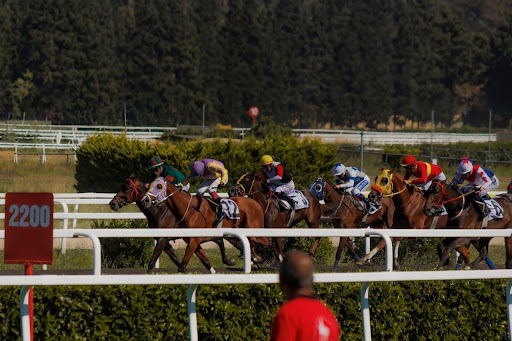
There are few more popular sports to wager on throughout the year than horse racing. However, interest levels in the equine sport reach high levels during May and June, as the Triple Crown series takes centre stage.
Following the action at Churchill Downs when the Kentucky Derby champion is crowned, the attention swiftly turns to Pimlico for the Middle Jewel.
But, if you’re building office pools to bet on sport, what are some of the key strategies that can be followed based on success stories within horse racing betting?
Horse Racing Pools History
Before assessing the strategies behind a successful horse racing win, it is first important to consider the prolonged history between the sport and pools. This type of betting is also known as pari-mutuel betting, which is as common in U.S. racing in this modern day as ever before.
This type of betting was invented in France during the 19th century by Joseph Oller, creating a fair system to make wagers on racing. In essence, the concept was to make bets against other gamblers rather than a bookmaker, with the prize money returned based on the odds of each runner, which were determined by the money in the purse.
Pool betting continues to be incredibly popular in this modern day, with the Tote established in 1913, giving players a chance to see the odds within the pool. The type of betting spread to the United States in 1927, helping to legitimize the sport in the process.
Nowadays, millions of dollars is wagered into the pool for some of the biggest races on the calendar, with events such as the Kentucky Derby typically seeing life changing money being won if a bettor is correctly able to land the trifecta.
80/20 Method
One of the most popular horse racing strategies comes in the form of the 80/20 method.
Here, a bettor will split their stake into two, with the vast majority being used to cover one market, and the remainder being used to cover another. For example, if a bettor has $100, they could place $80 on a horse to place, and the remaining $20 on the same horse to win.
This strategy can be effortlessly applied to making pool bets, as a bettor can avoid placing the entirety of their stake on one team to win it all. Instead, in pool betting, the stake can be divided into two or three. For example, with $100, you can place $50 on your favored selection to win, before putting $25 on two higher-priced selections to reach the later stages.
Dutching
One of the most popular strategic approaches when horse racing comes in the form of dutching. This enables a bettor to cover a range of different outcomes, increasing their chances of picking up returns regardless of the outcome. For example, when betting on a race, this could see a bettor making a wager on all three horses at the top of the market.
As long as one crosses the line first, the bettor will gain returns. This strategy can be easily applied to pools by making more than one selection in a certain market.
For example, if you’re involved in a golf pool for a tournament like The Masters, who could wager on three or four different players, as the returns that you stand to win will be greater than the stake that you have put down.
Banker Parlay
Experienced gamblers will typically look to find value when betting on horse racing by combining two or more selections into a parlay to enhance the returns that they stand to achieve.
This is still a dangerous tactic when betting on horse racing, as a defeat for any selection in a parlay would see the stake lost. This approach can also be taken when making pool selections by identifying two heavily favored teams and rotating them with two or three other picks on a weekly basis to reduce the stake that you are placing while still maximising the potential returns.
Each-Way Betting
Big fields typically attract sizable betting interesting, as they are widely considered to provide more value in the betting. This is one of the reasons why the Kentucky Derby is one of the most famous races in the United States. Races like this can produce each-way value when making bets, as horses priced over 8/1 will provide value.
This bet will cover two bets, one for the win and one for the place. Pool betting can also adopt this approach, especially in unpredictable horse racing and golf competitions. You can select an underdog in the pool, covering both the win and place options to maximise returns.