.jpg)
What if the secret to finding more joy in entertainment is by doing less? It sounds backwards, since most of us treat entertainment like a buffet and fill our plates as high as they will go. Yet many people finish a long stretch of shows, games, and feeds feeling oddly flat, as if none of it stuck.
Enjoyment depends on attention, and every extra choice, screen, or hour uses some of it up. Less of everything leaves more attention for whatever remains. The following sections show how that works in practice with options, screens, session length, and downtime.
Fewer Options Mean Easier Choices
In one widely cited grocery-store experiment, shoppers who stopped at a table of six jams were roughly ten times more likely to buy than those at a table of twenty-four, suggesting that a crowded menu makes deciding harder. Consider thirty minutes of browsing a streaming library, three trailers watched halfway, and a rewatch of an old favorite because picking something new felt like work. Every title you skip also leaves a lingering worry that something better was available, so the one you finally start has to prove itself against all the rest.
A shorter menu removes that pressure. Anyone who settles on one plan in advance, whether it’s to solve puzzles, do some gardening, play lottery games online, or play slots online, skips the comparison entirely. Each of those activities has a clear beginning and a natural stopping point, so it is easy to stay with once it starts. Many people also keep a short list of go-to favorites—such as a comfort sitcom, a well-loved album, or a favorite puzzle app—since the decision then takes seconds instead of half an hour.
Less Screen Time Means Fuller Attention
Beyond the choice itself, divided focus wears down most pastimes, and movies show it best. Research on second-screen viewing points to weaker recall when people use a phone during a show. A ninety-minute film watched with a phone in hand loses its thread with every notification, and viewers remember little afterward. Memories give a story its replay value.
Once the phone is in another room, jokes land harder, and plot twists surprise you. Games reward the same commitment, and a card player who follows every hand notices details that a distracted one misses. A short round of slots played with full focus is easy to follow, while one squeezed between messages passes without leaving a memory. You can keep the technology; one screen just needs your full focus at a time.
Shorter Sessions Mean Lasting Fun
Pacing matters too, because enjoyment fades when an activity runs past its peak. Two episodes of a series can feel wonderful, while the sixth in a row often feels like a chore. A fixed cutoff, such as two episodes and then bed, protects the best part and leaves you looking forward to tomorrow.
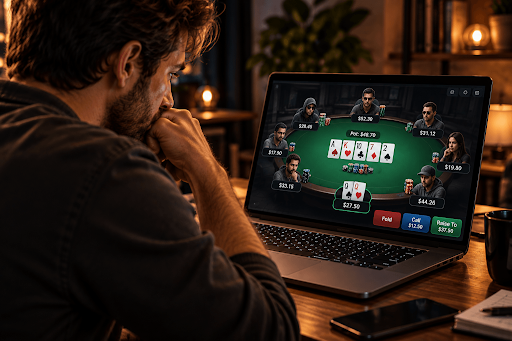
The same principle applies to games that involve actual money, where a budget matters most. A set time window and spending amount settle the decision before play starts, so one unlucky stretch is less likely to spoil the session. A number of licensed platforms also offer deposit limits and reminders to help players keep to those boundaries. When the session ends at the chosen time, it feels like a decision rather than a loss, and that keeps it a pastime.
Rarity Means Greater Anticipation
Finally, anticipation only exists when there is something to wait for, which is why rarity adds so much value. A weekly board game night usually feels more special than a daily routine built around the same thing, because the wait sharpens the excitement. Anything that ends a little early leaves you curious about what comes next, while anything that runs to exhaustion leaves you ready to move on.
Small pauses work in much the same way. Boredom in small doses points people toward what they truly want, and a quiet few minutes after a film lets the story settle. An unplanned half hour can feel more satisfying than a fully scheduled afternoon. This does not demand a big change; ending one round a little earlier than usual is enough to notice the difference.
It is easy to mistake doing less for giving something up. In practice, it works more like taking your favorite pastimes seriously enough to let each one land. Free time is not a scoreboard, and nobody wins by fitting in the most. Some people are happiest with a small routine of things they truly like. They give each one room, and it shows in how much they enjoy it. Doing less does not take anything away from entertainment; it gives the things you already love enough space to be enjoyed properly.
.jpg)