There is a dangerous moment in every office football pool.
It usually happens around Week 5.
You’re in first place.
You nailed three ugly road underdogs, correctly faded the team everyone else loved, and Karen from accounting — who picked the Chiefs every week because she likes the uniforms — is 11 games behind you.
Naturally, you begin thinking:
Maybe I’m actually good at this.
Congratulations.
This is where the trouble starts.
Office pools are fantastic. They make Thursday night football matter, give otherwise civilized coworkers a reason to accuse each other of cheating, and turn a random Broncos-Raiders game into a corporate emergency.
But they can also teach one very bad lesson:
Picking the winner is the same thing as making a good bet.
It isn’t.
Office Pools Reward Being Right
OfficePoolStop has built its entire platform around the fact that there are different ways to predict football.
Its 2026 offerings include traditional pick’em, confidence pools, survivor formats, margin pools, hybrid NFL/NCAA competitions and even bookie-style leagues. The company says it has hosted thousands of leagues in more than 30 countries since launching in 2012.
That variety creates different strategies.
In a standard pick’em pool, the assignment is brutally simple:
Who wins?
If Buffalo wins 31-30, you were right.
If Buffalo wins 42-10, you were also right.
Nobody cares that you would have needed to lay -350 in the first game and -900 in the second.
Your pool sheet just gives you one point and moves on.
Sports betting is far less polite.
The price matters.
A lot.
Confidence Pools Get Closer — But Not Close Enough
Confidence pools add another layer.
OfficePoolStop explains that players rank their selections from strongest to weakest, with more points attached to the games they feel most certain about.
That’s useful.
At least now you’re thinking about degrees of certainty instead of treating every pick equally.
But even here, certainty and value are not the same thing.
Suppose Kansas City has an 80% chance to win.
Fantastic.
If the moneyline implies an 85% chance, you may still have a bad wager.
Meanwhile, some hideous 4-8 team you would never put 16 confidence points on might be worth betting if the market has underestimated its chances badly enough.
That’s the part office pools usually don’t teach.
They teach:
Who is more likely to win?
Betting asks:
Is the price wrong?
Those are cousins.
They are not twins.
Warren Buffett Accidentally Gave Bettors Good Advice
Warren Buffett once repeated Ben Graham’s famous line:
“Price is what you pay; value is what you get.”
He was talking about investing, not whether the Jaguars should be +6.5.
Still, the man stumbled into a pretty good betting lesson.
A football team can be excellent and overpriced.
A bad team can occasionally be underpriced.
That’s why “I think they win” is an incomplete betting argument.
Fine.
At what number?
Your coworker can win the pool by picking favorites all season.
Try laying whatever price the market demands on every one of those favorites and see how pleasant Thanksgiving feels.
Probably less pleasant.
Survivor Pools Create Another Bad Habit
Survivor pools are even more interesting psychologically.
The object is not to find value.
It’s to stay alive.
OfficePoolStop’s survivor format is built around selecting one team to win each week, generally without reusing teams already chosen. Its 2026 platform even added optional BYE-week functionality and expanded automatic-pick tools.
That means the smartest survivor decision might be taking a massive favorite.
You don’t care that the price would be ridiculous in an actual betting market.
You care that Cincinnati doesn’t lose to Tennessee and turn your entry into a memorial service.
Completely reasonable.
But again, the skill doesn’t transfer perfectly.
A -500 favorite might be an excellent survivor selection and a lousy straight wager.
One game.
Two completely different decisions.
Being the Best Picker in the Office Is Still Useful
None of this means your pool success is meaningless.
Far from it.
Good pool players usually develop useful habits.
They study injuries.
They understand matchups.
They recognize when public opinion is drifting too far.
They stop blindly picking the home team because someone said “home-field advantage” on television in 1998.
OfficePoolStop’s current platform even includes trends, career statistics, what-if simulations and standings tools designed to help players examine performance over time instead of relying on memory.
That’s valuable.
But the next step is learning to attach probabilities and prices to those opinions.
That’s where picking ends and betting starts.
Then You Have to Shop
Once you decide a wager has value, there is another problem:
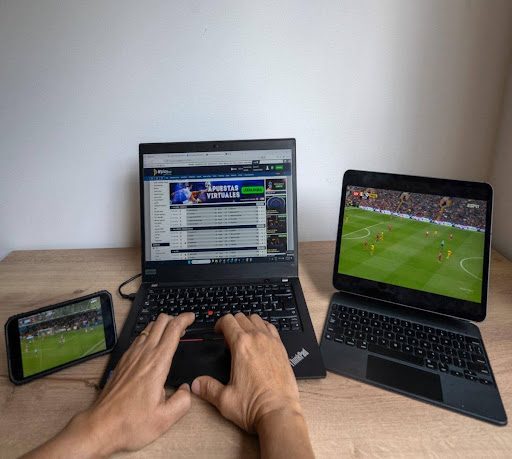
Not every operator has the same price.
One site might offer +145.
Another +155.
One might deal -105 where another wants -115.
And over hundreds of wagers, those differences stop looking tiny.
They start looking like money.
The TheRX’s online betting site guide compares operators on factors including odds value, payout history, banking, limits, rules and mobile usability rather than assuming the first app somebody downloads is automatically the best place to wager.
That’s the logical extension of what good pool players already do.
Compare the teams.
Then compare the prices.
Your Office Pool Ego Is the Real Danger
Here is the funniest part.
A good run in an office pool gives people confidence.
Sometimes way too much confidence.
You finish first among 27 coworkers and suddenly you’re walking around like Billy Walters because you correctly picked Baltimore over Cleveland.
Easy, professor.
Karen from accounting was using birthdays as tie-breakers.
The sample may not be as intimidating as you think.
A pool can tell you that your football opinions are better than random guessing.
It cannot tell you whether you understand implied probability, market price, bankroll management or line value.
Those are different skills.
And there is no shame in that.
The office pool is supposed to be fun.
Keep the Pool. Lose the Illusion.
Keep making the picks.
Talk trash.
Use the confidence points.
Celebrate when the guy who sends nine emails about “strategy” gets eliminated from survivor by a 10-point favorite.
That’s the good stuff.
Just don’t confuse winning the office pool with beating a betting market.
One rewards correctly identifying winners.
The other rewards correctly identifying mispriced probabilities.
Sometimes those skills overlap.
Sometimes they don’t.
And if you finish first in the office again this year, enjoy it.
Take the trophy.
Take the money.
Remind Karen every Monday.
Just don’t quit your job yet.
She might have a comeback season.
Hyperlinks/source references to preserve
OfficePoolStop — What’s New for 2026
OfficePoolStop — NFL Confidence Pool Strategy
OfficePoolStop — NFL Office Pools history and formats
Berkshire Hathaway 2008 shareholder letter
TheRX sportsbook and betting-site guide