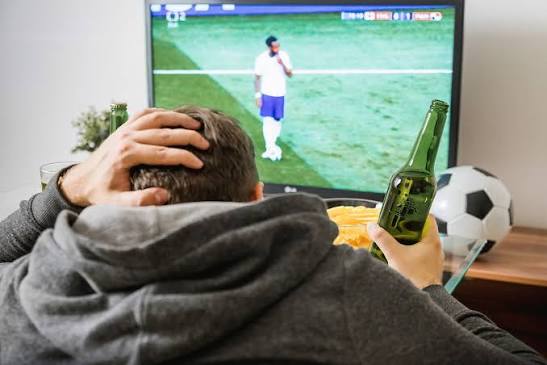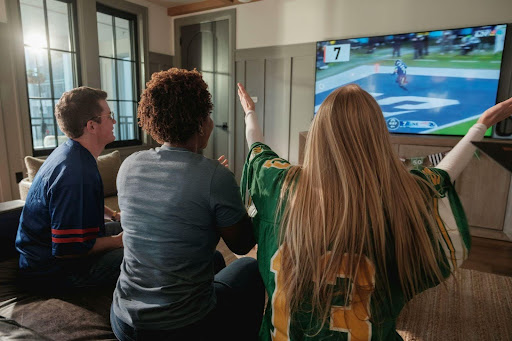
Consider the amount of time that you take each day to access the Internet with your mobile phone. If you are like most consumers, this can be measured in hours as opposed to minutes. We have come to rely on smartphones to keep up to date with the latest events, and fans of football are certainly no different.
This observation has also given rise to a term that might be unfamiliar to the majority of readers. What does "second-screen viewing" signify? How has this habit already begun to change the landscape of football? Are there any ramifications that it may have on the larger sports industry? These are all valid questions that should be addressed.
How Football Fans Actually Use a Second Screen
Researchers and industry studies have been showing for some time that live sports are no longer watched with full attention fixed only on the main broadcast. For many viewers, the match now unfolds alongside a second screen, whether that means checking social media, looking up stats, messaging friends, or even jumping between different kinds of entertainment at the same time. For example, now fans don't engage in place during halftime when watching the game at home: they might play anytime even when the ball is rolling. Nielsen Sports reported that 47% of people who watch sports on TV or digital platforms also consume other live content simultaneously, while earlier academic research found that 79% of sports fans access social media and 65% look up sports-related content while watching televised games.
Football has become one of the clearest examples of this shift. Fans are no longer satisfied with the live feed alone, as many now build a broader experience around the match through player stats, injury updates, instant reactions, alternate commentary, and extra camera angles in different markets. Broadcasters are adapting to that behavior by offering mobile-friendly streams, real-time analytics, and interactive features designed to keep audiences engaged without sending them elsewhere.
The Notion of "Parallel" Information
To be clear, not everyone has adopted this mentality. However, viewing any sports event with the help of different sources can provide several unique benefits. Some of these include:
- Keeping track of the latest updates if one source happens to lag.
- Hearing two different live commentaries.
- Accessing unique camera angles.
- Sharing results with others (essentially a form of online social gaming)
Whether discussing a regular NFL match, or competitions leading up to the vaunted Super Bowl, fans are provided with more options than ever.
How Have Broadcasters Responded?
Second-screen viewing has also impacted mainstream broadcasting services. So, how have they responded? One of the ways in which companies such as CBS and NBC have kept ahead of the curve is to provide smartphone-friendly streams to their active viewers. While some of these may come in the form of a dedicated app, others can be accessed via a standard browser.
Furthermore, many companies offer real-time analytics. These include (but may not be limited to) odds, fixtures, player stats, and recent injury reports. The intention here is to ensure that followers do not migrate elsewhere to obtain similar information.
Although the rules of football may not have changed, the ways in which we follow the latest games certainly have. Second-screen viewing is now the norm, and fans can now enjoy an even more immersive overall experience, thanks in large part to the steps that football broadcasters have already taken.