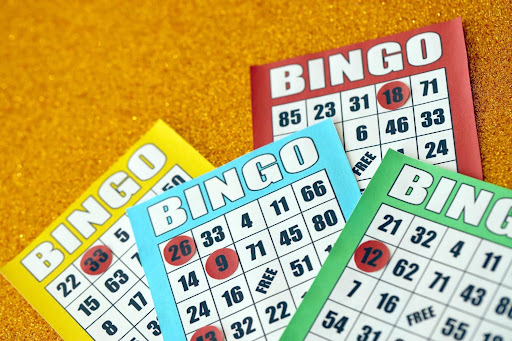
Lottery and bingo sales accounted for more than $346 billion last year in combined global revenue, more than a fourfold of what sports betting took home in the same period. And yet vast majority of those revenues were derived from people who didn’t ever look at an odds table, didn't “choose” a bingo card, and didn’t think twice about when they sat down to play.
That’s the same decision-making muscle you apply when you’re playing arcade-betting games like 1xbet chicken road 2, choosing your step between taking a safe payout and risking a bigger multiplier, but that logic can also be found in lottery tickets and bingo rooms. Except for most players, the choosing part is skipped.
Pick Lottery Games by Odds, Not Headlines
Nine-figure jackpots are the stuff of news reports and long lines at convenience stores. They also pack the ticket pool, so your already tiny odds of winning barely get any smaller, while the chances of splitting the prize pot with strangers get bigger.
| Game | Format | Odds of Top Prize |
| 2by2 | 4 from 52 | 1 in 105,625 |
| Match 6 Lotto | 6 from 49 | 1 in 4,661,272 |
| Mega Millions | 5 from 70 + 1 from 25 | 1 in 302,575,350 |
| Powerball | 5 from 70 + 1 from 26 | 1 in 292,201,338 |
The gap between the top row and the bottom two is a factor of roughly 2,800. That is not a rounding error.
Go Past 31 on Your Ticket
Players who fill lines with family birthdays, anniversaries, and lucky dates cap themselves at numbers 1 through 31, the same range millions of others favor. None of that affects which numbers get drawn, because every combination carries identical odds. But it absolutely affects how many people hold a matching ticket if those numbers do land. Going higher means fewer co-winners and a fatter solo payout.
Syndicates exploit this from a different angle. A 15-member group that pooled lottery tickets in 2024 took home nearly 47,000 AUD from a single draw, the top individual share clearing $9,300 on just three purchased positions.
Bingo Card Math Worth Knowing
Tippett's Median Theory
British statistician L.H.C. Tippett built a model around game length and number distribution. In a 75-ball game, the median sits at 38. In a 90-ball game, it is 45. His observation was that longer games (full-house rounds, for instance) pull called numbers toward those medians, while short rounds favor numbers nearer the extremes. You can pick your cards accordingly.
Granville's Balance Principle
Financial analyst Joseph Granville came at bingo from a portfolio-diversification mindset. His card-selection rules read like something from an investment memo.
- Roughly equal odd and even numbers per card
- Ending digits spread wide, so you are not stacking 12, 22, 32, 42 on the same sheet
- High-low mix rather than clustering everything above or below 50
- When buying multiple cards, each one should cover a different number zone
Online bingo rooms let you preview and select cards before a round locks, which physical halls almost never allow. On platforms like 1xbet you get access to multiple bingo formats and room sizes, meaning Granville's balance rules or Tippett's median picks can actually be applied instead of left as theory. That preview window is the real edge digital rooms offer.
Off-Peak Sessions Tilt Bingo Odds in Your Favor
Bingo prizes do not scale with the number of players. A $50 pot stays $50 if ten people are playing or a hundred. Your cards take up a bigger percentage of the total pool in a thin room.
- 5 cards among 100 total = 5% win probability
- 5 cards among 50 total = 10%
- 5 cards among 25 total = 20%
Early mornings, midweek afternoons, and late-night slots consistently draw fewer participants. Regular players who log in at those hours accumulate small wins that casual peak-time players rarely see.
Second-Chance Lottery Draws
Timing does not help in lottery the way it helps in bingo, since every ticket enters the same pool regardless of when you bought it. But second-chance draws, where your non-winning ticket automatically qualifies for a separate drawing with smaller prizes, remain weirdly underused. Some of them give away cars, vacations, and gift packages. Worth checking before you toss a losing ticket.
Bankroll Splits That Keep You Playing
A weekly cap only works if you treat it as a hard stop, not a suggestion you revisit when the last round felt close.
For bingo, fewer cards across more sessions beats loading up on a single game. You get exposure to more draws and flatten variance over time. Lottery follows the same logic but inverted. One ticket for each of ten separate draws gives you ten cracks at the randomizer, while ten tickets in one draw just nudge the odds on a single event.