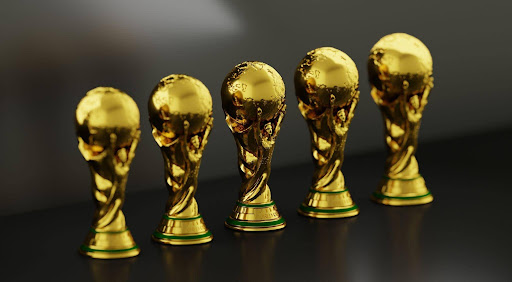
The 2026 World Cup is just a few weeks away now, and with the European domestic football season wrapping up, it's full steam ahead for North America.
This will be the biggest World Cup ever, with an expanded format bringing more teams to the tournament and three host nations for the first time in history. Games will be played across Canada, Mexico, and the United States, promising to be a spectacle unlike anything the competition has seen before.
The total matches played increase from 64 to 104, providing fans with more chances to see some of the best players in the world across major cities from Vancouver to Mexico City to New York.
The opening match takes place at Estadio Azteca in June, running all the way through to MetLife Stadium's final on 19th July.
It will be tough for the host nations to secure passage into the competition's latter stages. Alberta casino sites and sports betting bookmakers have Canada down to improve on their group-stage finish in 2022, whilst Mexico also went out after finishing third in a group containing eventual champions Argentina.
The USMNT reached the round of 16 before the Netherlands knocked them out, representing their best performance in years.
It's an exciting few weeks where there is genuine unpredictability. The tournament will likely be the last dance for Lionel Messi and Cristiano Ronaldo on the international stage, but even two of the game's greatest players won't overshadow what could be one of the toughest World Cups to call in some time.
The expanded 48-team format hasn't removed the old World Cup anxiety around the so-called group of death. If anything, it has intensified it.
With more nations involved and only the top two guaranteed to progress from each group, the draw has produced several clusters where pedigree, form and travel demands combine to create genuine peril for even the strongest sides.
Here are the groups that look the hardest to navigate as the 2026 World Cup approaches.
Group I: France, Senegal, Norway, Iraq
Widely regarded as the single hardest group of the entire tournament, Group I has the lowest average FIFA ranking of all 12 groups, meaning the overall quality is the highest concentration of talent you'll find anywhere in the competition.
France remains one of the strongest squads in world football. Finalists in 2022 and perennial contenders, they look to avenge their loss to Argentina in one of the best games ever played.
Senegal are African champions and consistently competitive on the global stage. Iliman Ndiaye is due a breakout tournament after strong club form, and they know how to win big matches.
Norway bring Erling Haaland and Martin Ødegaard, two world-class talents capable of deciding matches on their own, while Iraq are the wildcard after beating Bolivia in the intercontinental playoffs.
This is the classic "three giants, one dangerous outsider" configuration that defines a true group of death. Someone good is going home early.
Group F: Netherlands, Japan, Sweden, Tunisia
Group F is brutally hard to call, and it's easy to see why. There's no weak link here, and all four teams can realistically take points off each other in ways that make predicting the final standings almost impossible.
The Netherlands are a top-10 side with a deep, tactically flexible squad. Virgil van Dijk, in what might be his final World Cup, wants to make a major impression after Nations League disappointments.
Japan are arguably Asia's strongest team and have been trending upward for years and recently beat England at Wembley. If Takumi Minamino and Wataru Endō return to full fitness, they become even more dangerous.
Sweden bring tournament pedigree and physicality that makes them a nightmare matchup for anyone. Their front two of Viktor Gyökeres and Alexander Isak is genuinely world-class, capable of exploiting any defensive lapse.
Tunisia are consistently competitive and technically disciplined. They won't be intimidated by bigger names and have shown repeatedly they can grind out results when required. Underestimate them at your peril.
The margins in this group will be razor-thin, with goal difference potentially deciding who progresses and who goes home disappointed.
Group K: Portugal, DR Congo, Uzbekistan, Colombia
Group K sits just behind Groups I and F in overall difficulty, ranking fourth-toughest by FIFA metrics. What makes it particularly intriguing is the blend of established powers and emerging threats creating genuine uncertainty.
Portugal remain elite, even as Cristiano Ronaldo approaches the absolute end of his international career. This is his final World Cup, and you can guarantee he'll be motivated to sign off with something memorable.
Colombia are a top-15 calibre side with athleticism and vibes. They’ll be familiar with the climate too. DR Congo have improved significantly in recent years and have Premier League experience with Yohane Wissa and Aaron Wan-Bissaka.
Uzbekistan, making their World Cup debut, are better than many casual fans realise. They've been rising steadily through Asian football, and with World Cup-winning captain Fabio Cannavaro marshalling the backline, they could be hard to break down.
Portugal versus Colombia on the final group matchday could go right down to the wire, with both teams potentially needing results to guarantee progression.
The Final Word
The toughest groups for the 2026 World Cup clearly look to be Group I and Group F. Both are packed with teams capable of beating each other, and neither has a clear "easy" win for anyone involved.
Other groups will bring close matches and overall just good tournament energy. The Group A game between Mexico and South Africa is passion central. El Tri’s home advantage could be decisive, or it could become a burden if results don't go their way early.
As for Canada, their group presents challenges but also represents their best realistic chance of qualifying for the knockout stages.
Bosnia, Switzerland and Qatar are all beatable opponents if Canada can harness home support and turn difficult games into competitive performances rather than blow-outs. The key will be squeezing points from at least one of the stronger sides whilst avoiding defeats that damage goal difference.
The expanded format means more drama, more upsets and more heartbreak spread across more groups than ever before. That's exactly what makes the World Cup special.